A Family Winery in Napa Valley
Our Story
Aum Cellars is the Napa Valley label of Hoffmann Family Winery — a small estate where Pete Hoffmann's lifelong love of the vineyard, patient craft, and a reverence for nature come together in every bottle.
Origins
The Story of Hoffmann Family Winery
The Vineyard Came First
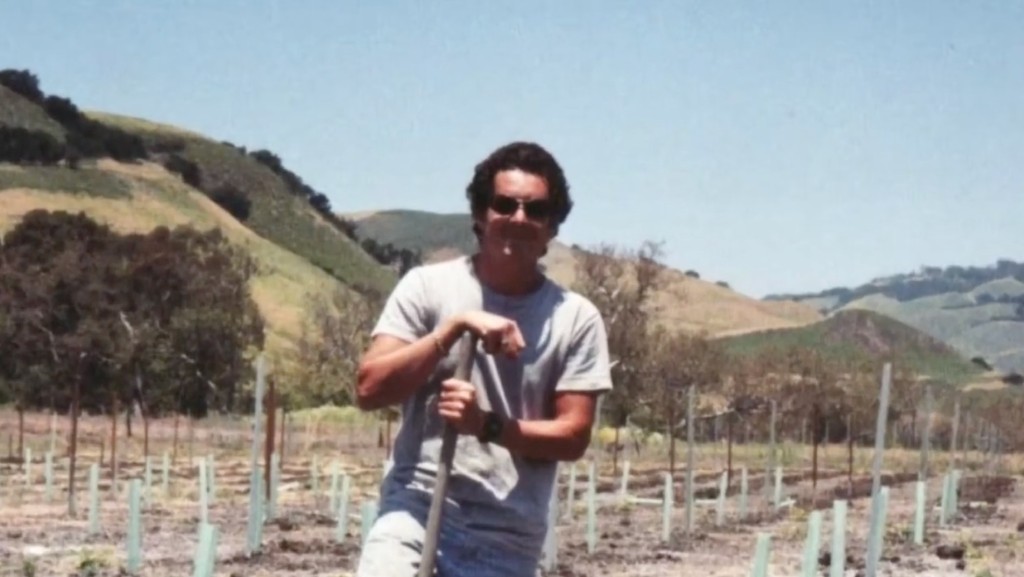
Long before Hoffmann Family Winery had a name, before Aum Cellars had a label, and decades before Pete Hoffmann made wine in Napa Valley, there was a boy growing up among the vineyards of Southern California.
Pete was raised in Rancho Cucamonga, California, at a time when the region was still deeply connected to its agricultural and winemaking past. Agriculture was already woven into his family's history. His father grew avocados and citrus, his grandfather worked in the timber industry, and his great-grandfather raised horses. Pete grew up understanding that the land wasn't simply scenery. It was something you worked, watched, learned from, and respected.
Wine was part of that childhood as well. A neighbor made wine in his garage, and Pete's father—an enthusiastic wine lover himself—did the same. In 1979, when Pete was just eleven years old, he helped his father make wine for the first time. That same year, his father took him north on a road trip to Napa Valley, including a visit to the historic Inglenook winery. For an eleven-year-old boy from Southern California, it was an early introduction to a place that would eventually become his home and the center of his life's work.
Years later, Pete enrolled at California Polytechnic State University, San Luis Obispo, where he studied Ecology and Systematic Biology. It wasn't the conventional path to becoming a winemaker, but that distinction would ultimately become one of the defining characteristics of his approach to wine. His education taught him to think in terms of ecosystems—the relationships among plants, soils, water, climate, organisms, and the environment surrounding them. Those ideas would later become central to the way Pete approached a vineyard.
Becoming a Grower
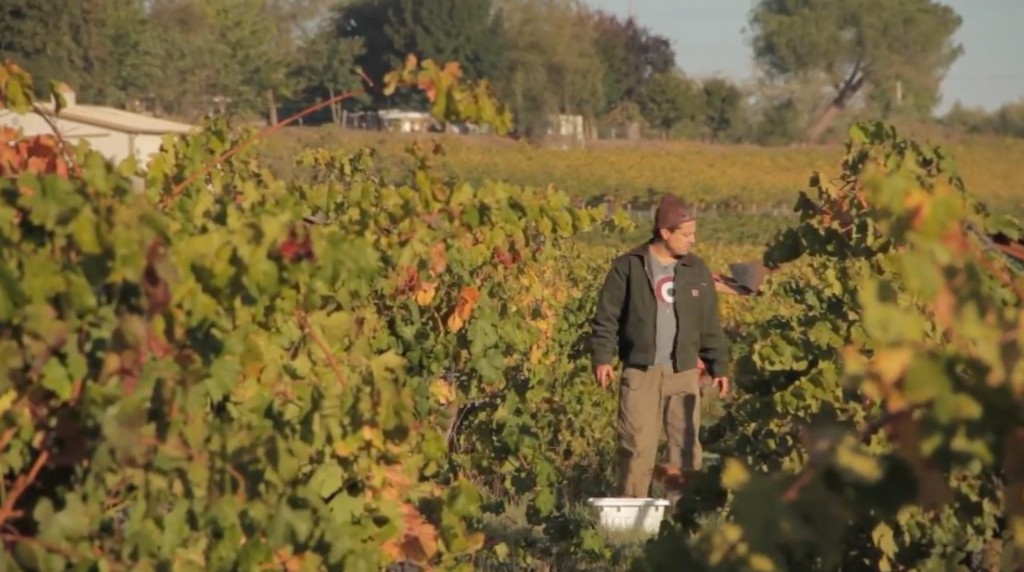
While at Cal Poly, wine moved from an early fascination toward a serious pursuit. Pete learned winemaking in the mid-1990s, but much of his real education was increasingly taking place outside the classroom, in vineyards. He became particularly fascinated with Rhône varieties, especially Syrah, and discovered wines from producers such as Alban Vineyards that demonstrated just how expressive those varieties could be in California.
That fascination led Pete into vineyard work, and vineyard work became a career. He began planting and managing vineyards on California's Central Coast, including work in the Santa Barbara area. What started with individual vineyard projects grew into responsibility for premium vineyard properties and fruit destined for serious California wineries, including the acclaimed Sine Qua Non.
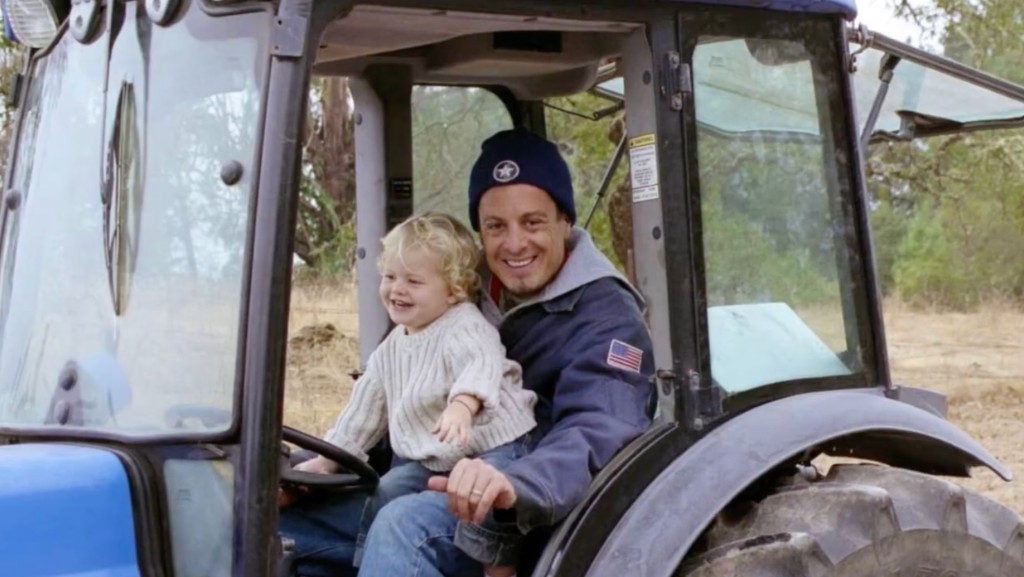
It was during these years that Pete developed the philosophy that would eventually define his own winery. Great wine doesn't begin with a winemaker standing beside a barrel. It begins underground—with soil, roots, water, the health of the vine, and an understanding of when to intervene and when to leave something alone. By the time Pete began making wine seriously, he had already spent years learning how wine is grown.
In 1996, while managing vineyards in the Santa Barbara region, Pete obtained Cabernet Sauvignon fruit from one of the vineyards he worked with and made his first barrel of wine. The boy who had once helped his father make wine in a garage was now making wine from vineyards he understood professionally. Something important had happened along the way: Pete had become a grower before he became a winemaker.
Napa Valley
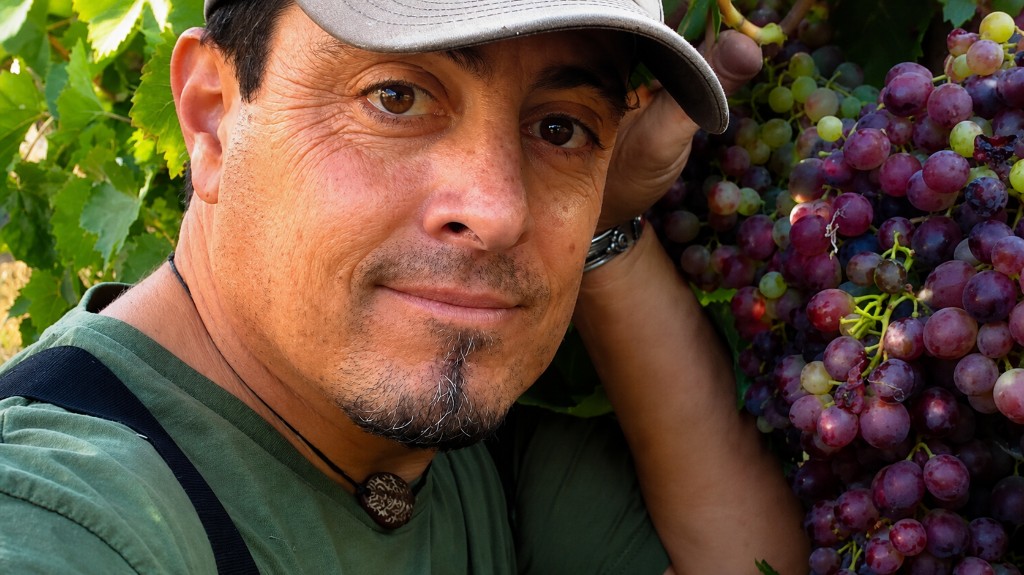
In 1997, Pete's vineyard career brought him back to the place he had first visited with his father as a child: Napa Valley. He was hired to oversee vineyard holdings for Andy Beckstoffer, one of Napa Valley's most influential growers. For Pete, it was an opportunity to work at an entirely different level of viticulture, where decisions about soil, exposure, elevation, water, canopy, ripening, and yield could ultimately reveal themselves years later in a finished bottle.
Pete continued building that expertise, and in 1999 he joined Stag's Leap Wine Cellars as a vineyard manager. His career eventually expanded well beyond a single vineyard. He taught viticulture at Napa Valley College, sharing practical vineyard knowledge with the next generation of growers. He worked in grower relations for Treasury Wine Estates, giving him exposure to vineyards and growers throughout the region, and he provided vineyard consulting throughout Napa Valley.
For years, Pete's professional life revolved around helping other people grow exceptional grapes. But he never stopped making wine.
The Beginning of Hoffmann Family Winery
Around 2000, Pete began making small lots of wine for himself in Napa. There was no grand launch, massive production facility, or desire to manufacture thousands of cases of wine designed to taste exactly the same every year. Pete approached his own wine the same way he approached a vineyard: pay attention, understand what nature has given you, and don't interfere simply for the sake of interfering.
In 2003, he released his first commercial vintage, marking the beginning of Hoffmann Family Winery. What emerged was a winery built from the vineyard outward rather than the marketing inward. The wines were an extension of Pete's years as a viticulturist—small-production wines made by someone who understood that the character of a wine is established long before fermentation begins. That philosophy eventually found its expression in Aum Cellars, the Napa Valley label of Hoffmann Family Winery.
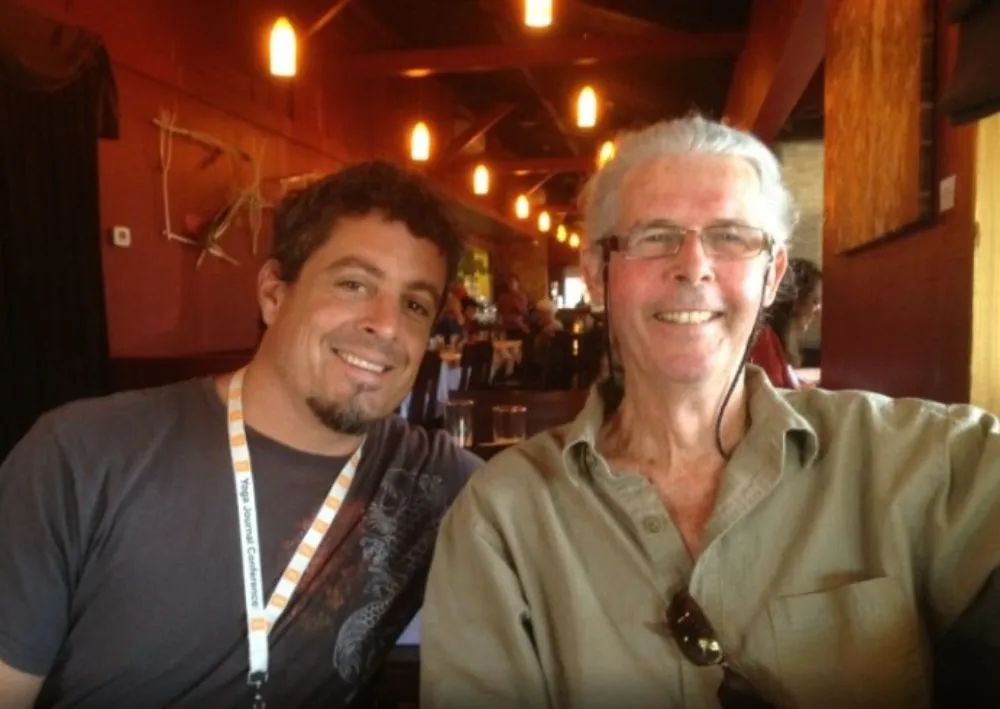
My mentor and great friend Alan York was such an inspiration to my wine making and grape growing journey.
Pete Hoffmann
The Philosophy Behind Aum
The name Aum reflects something deeper than a wine brand. It represents connection—between the vineyard and the wine, between nature and the person farming it, and between the experience of growing something and ultimately sharing it with someone else.
That idea fits Pete unusually well. His background in ecology taught him to see a vineyard not as rows of grapevines operating independently, but as a living system. Soil matters. Microorganisms matter. Plants growing between the vineyard rows matter. Birds, insects, animals, weather, and the choices made by the person farming the land all matter. Everything is connected.
That belief continues to shape the farming and winemaking philosophy behind Aum Cellars. The vineyards are farmed organically, with regenerative and dry-farming practices intended to support healthy soils, biodiversity, and deeper-rooted vines. Cover crops, compost, animals, and the natural biological activity of the vineyard are treated as parts of the ecosystem rather than obstacles to be controlled.
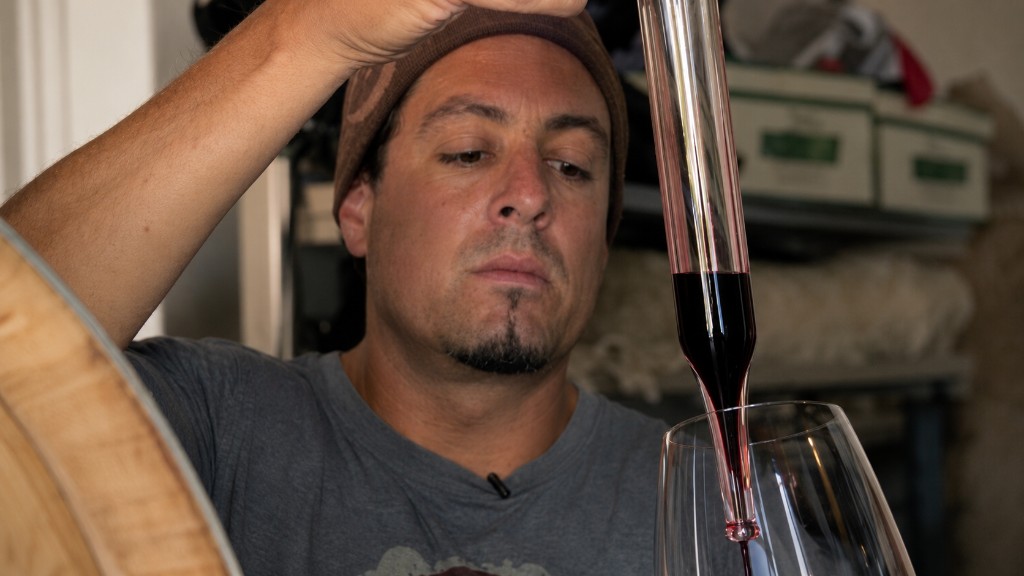
Pete's approach in the cellar follows the same philosophy. Native yeasts are allowed to carry out fermentation, the wines are unfined and unfiltered, and intervention is deliberately restrained. He isn't interested in creating wines whose identity comes primarily from cellar technique. The goal is the opposite: let the vineyard speak.
Vintage variation isn't something to erase. A vineyard experiences a different year every year. Rainfall changes. Temperatures change. Growing seasons change. The vines respond, the fruit responds, and ultimately the wine responds. Pete believes a wine should be allowed to reflect that.
Natural Beauty Doesn't Need to Be Covered Up
One of Pete's favorite ways of explaining his philosophy involves oak. He compares excessive oak in wine to putting too much makeup on a naturally beautiful person. At some point, instead of enhancing what's underneath, you begin to cover it up.
Pete feels the same way about wine. Cabernet should taste like Cabernet. Syrah should taste like Syrah. Malbec should retain the qualities that make Malbec distinctive. And a wine grown in a particular Napa Valley vineyard should carry something of that vineyard into the glass.
The winemaker's job isn't to erase those differences. It's to protect them.
That is why Aum wines aren't designed around a formula. They're intended to be expressions of grape, vineyard, season, and place—wines with personality rather than uniformity.
A Winery That Remained Personal
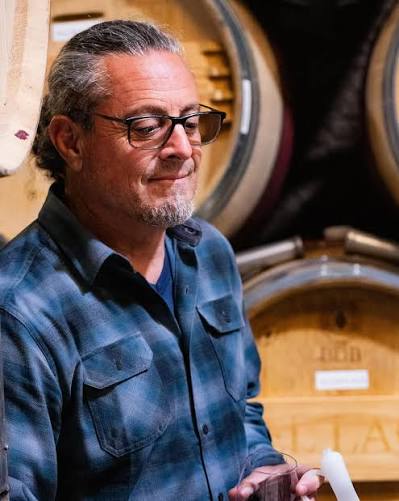
As Napa Valley evolved around him, Pete chose a different path from the large-production tasting rooms and increasingly polished luxury experiences found throughout the region. Hoffmann Family Winery remained small, personal, and hands-on.
Pete is not simply the name behind the winery. He is the person who has spent decades walking vineyards, managing vines, teaching viticulture, making wine, and learning from each growing season. When guests visit Aum Cellars, that is the experience they encounter. There isn't a corporate script separating the visitor from the winemaker. There is Pete.
The person pouring the wine is also the person who can explain why a particular vineyard behaved differently that year, what happened during fermentation, why he chose not to manipulate something in the cellar, or what he sees happening beneath the soil. That intimacy and direct connection to the person who grows and makes the wine has become part of the identity of Hoffmann Family Winery.
More Than Four Decades Later
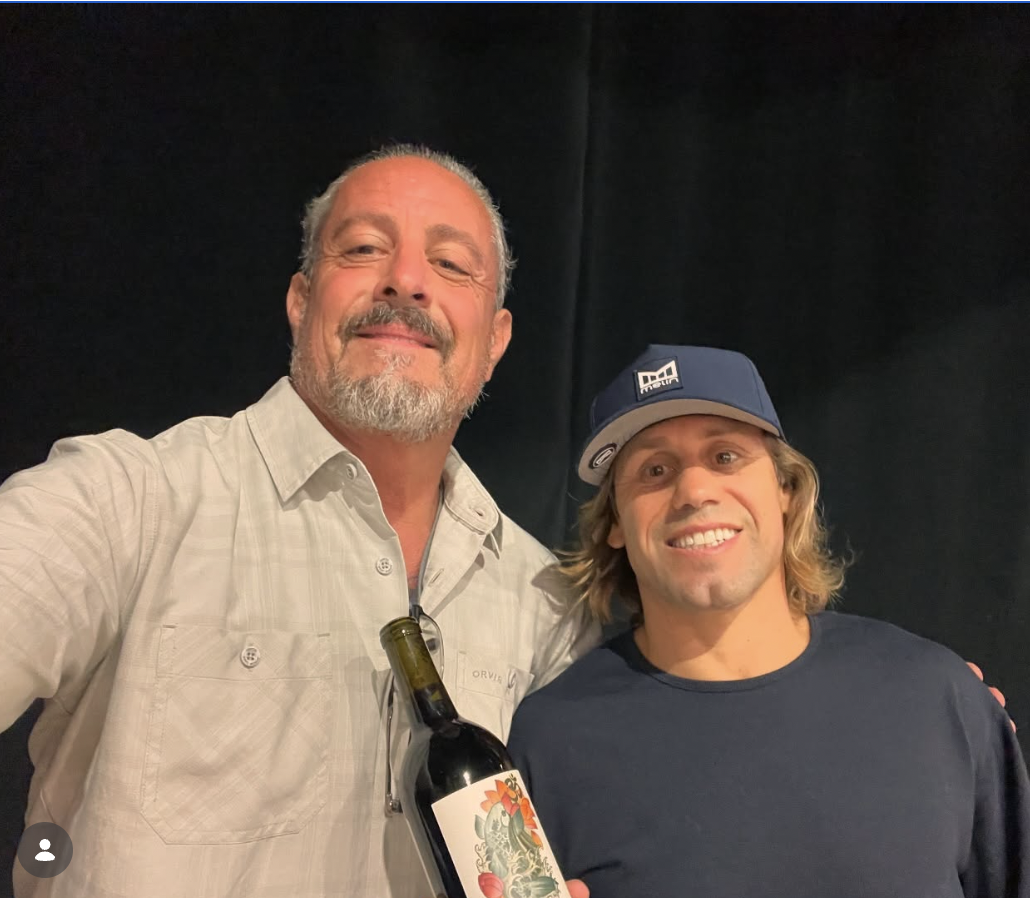
There is a remarkable symmetry to Pete Hoffmann's story. At eleven years old, he stood beside his father making wine in a garage in Southern California. He went on to study ecology, learn winemaking, plant vineyards, manage vineyards, make his first barrel, and follow the vines north to Napa Valley. He managed vineyards for some of the most respected names in California wine, taught viticulture, worked with growers throughout the region, and eventually began producing wines that reflected his own philosophy.
Today, Aum Cellars by Hoffmann Family Winery is the culmination of that journey. It isn't a winery created by someone who entered the wine business and then went looking for a story. The story came first. It began with a family connected to agriculture, a father making wine in his garage, an eleven-year-old boy discovering what grapes could become, an education in ecology, and decades spent among vines.
More than four decades after that first experience making wine with his father, Pete is still doing essentially the same thing: walking vineyards, paying attention to the land, learning from each season, and turning what nature gives him into wine without erasing the character that made it distinctive in the first place.
The philosophy behind Hoffmann Family Winery can ultimately be reduced to something very simple: the best wines aren't manufactured into existence. They're grown.
Pete Hoffmann — Why I started making wine
The Energy of Aum
At Aum Cellars, wine begins long before a bottle is opened.
It begins in the vineyard—with the soil, the vines, the seasons, and the intention behind how the land is cared for.
Crystals have become part of that story.
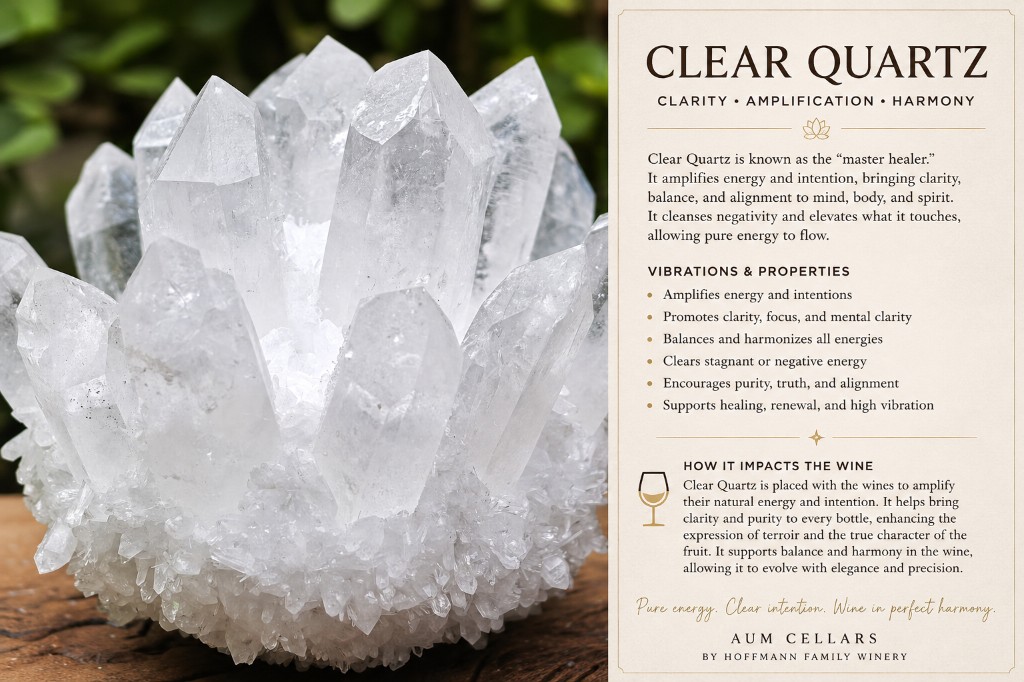
Throughout the vineyard, Pete places selected crystals among the vines as symbols of balance, abundance, protection, grounding, and connection to the land. They aren't hidden away as decoration. They are deliberately incorporated into the vineyard as part of the environment in which the grapes are grown and the experience Pete has created at Aum.
That ritual continues from the vineyard to the glass.
During tastings, crystals are incorporated into handcrafted leather wraps designed for wine glasses and bottles. Each crystal is selected to complement the character and personality of the wine—whether a wine feels bold and grounding, expressive and energetic, or elegant and contemplative.
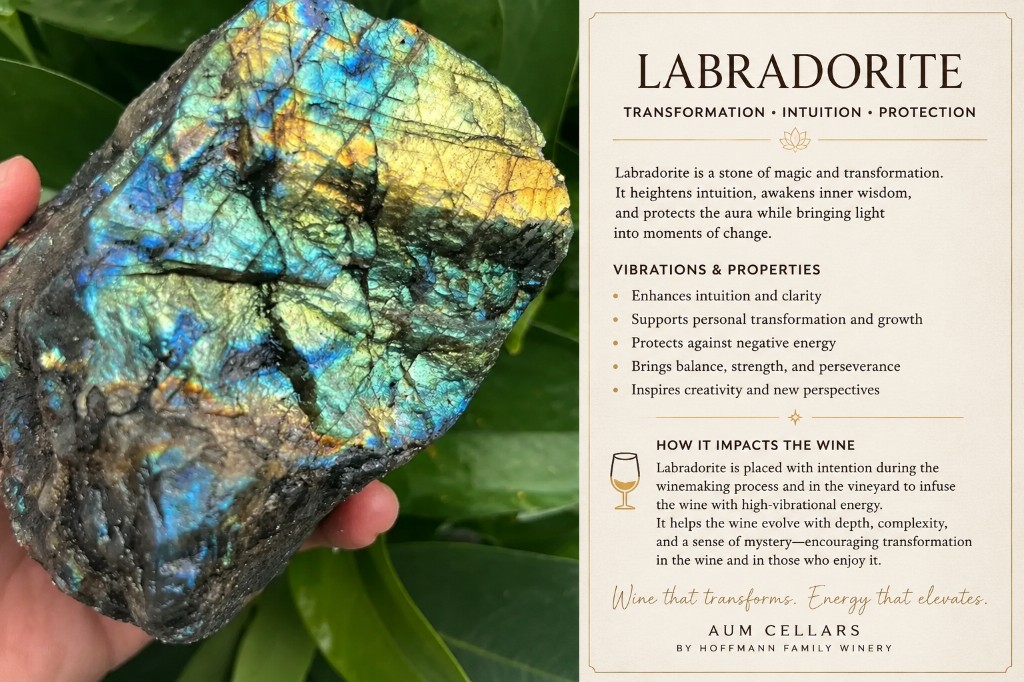
The idea isn't that a crystal changes what is in the bottle. It changes the way we approach the moment.
Wine tasting is sensory by nature. We slow down. We notice aroma, texture, flavor, temperature and place. The crystals add another element to that ritual—an invitation to be present, to pay attention and to experience the wine rather than simply drink it.
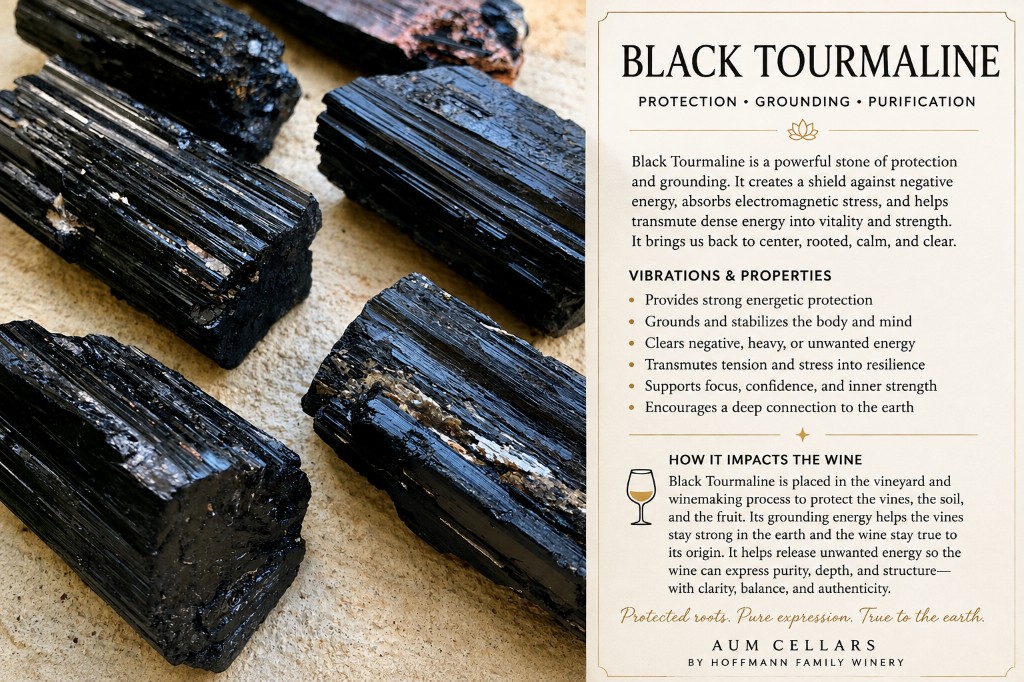
That philosophy fits naturally at Aum Cellars. The name Aum itself evokes connection, harmony and awareness. Pete's approach to wine is similarly personal: organically farmed vineyards, small-production wines and experiences designed to bring people closer to the land and to one another.
So when you see crystals nestled among the vines, wrapped around a bottle or resting beside your glass, they're there intentionally.
From vine to bottle to glass, they're part of the Aum experience—a reminder to slow down, connect, and enjoy where you are.
The Art Behind the Aum Cellars Label
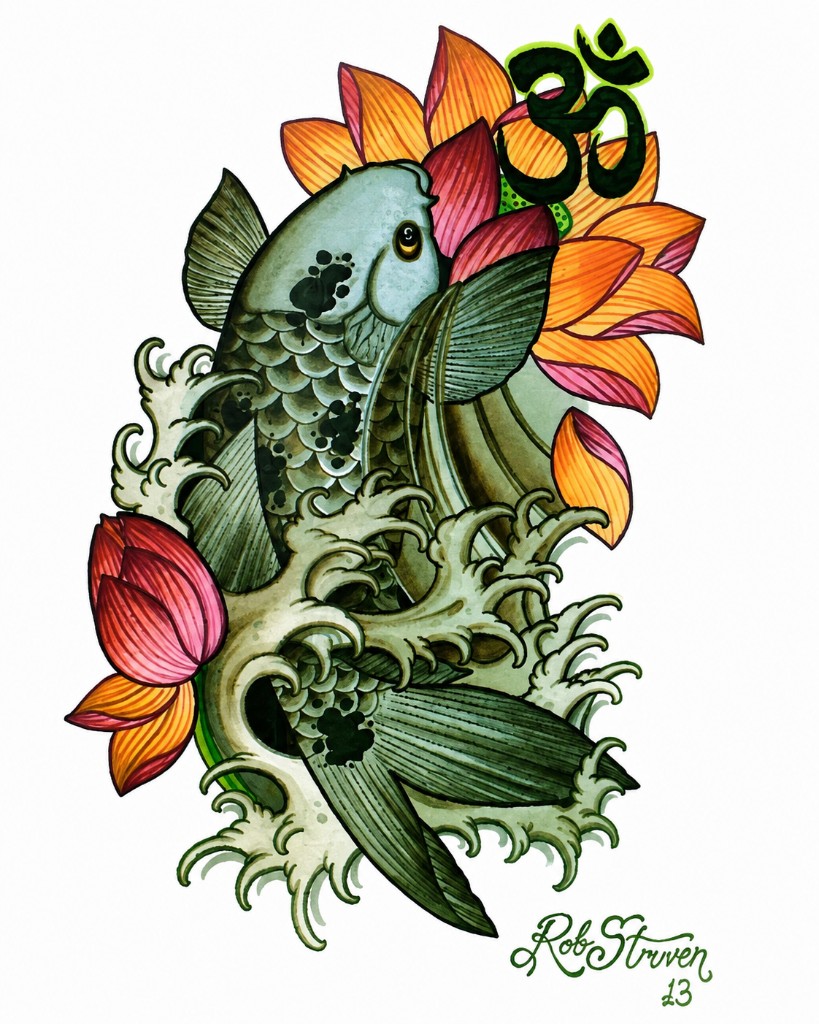
The distinctive Aum Cellars wine label was created for winemaker Pete Hoffmann by tattoo artist Rob Struven, bringing the expressive style and symbolism of tattoo art to a bottle of Napa Valley wine. Pete wanted something different from the traditional aesthetic of a Napa Valley wine label—art that was personal, unconventional and capable of telling a story before the bottle was ever opened.
Rob's original artwork features koi fish, lotus blossoms and the Aum symbol, each chosen for its deeper meaning. Koi are traditionally associated with perseverance, strength and transformation, while the lotus represents growth, renewal and the ability to emerge beautifully from challenging circumstances. The Aum symbol brings those ideas together through themes of balance, connection and intention—the same philosophy that runs throughout Aum Cellars by Hoffmann Family Winery.
The collaboration with Rob was a natural fit for Pete. Rather than commissioning a conventional graphic design, Pete turned to a tattoo artist whose work could give the label the character, movement and individuality he envisioned. The result is an original, tattoo-inspired wine label that feels more like a piece of collectible art than traditional wine packaging.
That individuality mirrors Pete's approach to winemaking. Aum Cellars is rooted in Napa Valley, but it isn't interested in looking or feeling like every other Napa winery. From the art on the bottle to the wine inside it, the goal is expression, personality and authenticity.
Every bottle tells two stories: the wine Pete created and the art Rob created to represent it.
Good to Know
Frequently Asked Questions
Aum Cellars is the Napa Valley label of Hoffmann Family Winery, founded by Pete Hoffmann — winemaker and viticulturist. The estate is a small family winery, not a high-volume tasting room.
Most Aum Cellars wines are estate grown in Napa — Coombsville, Atlas Peak, and beyond. A few reserve bottlings, including Russian River Pinot Noir and Sierra Foothills Grenache, are made from sourced fruit and are labeled that way.
The vineyard is organically farmed and dry-farmed, with a light hand in the cellar: native yeast, unfined and unfiltered wines, and no recipe winemaking. The aim is wine that tastes of the place it grew.
Unfiltered Authenticity
We invite you to taste the difference that dedication to craft makes. Our wines are not meant to be perfect; they are meant to be alive. They evolve in the glass and tell the story of the season that created them. Walk the vineyard with us, or request a private tasting at the estate.